Winter is Coming 30/04/2012
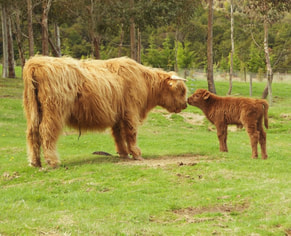
And I'm not talking about Game of Thrones here. We were blessed with 16 straight days of glorious weather during April; we had temperatures up to 26 degrees C and no rain. Of course it all had to come to an end. We now lose the sun over the hill at the back at around 4:00pm and the temperature plummets accordingly. This morning we awoke to an outside temperature of 5 degrees C with a wind chill which made it feel like -8 degrees C, there is a dusting of snow on the ranges and we've had the fire lit all day. Time to get all those winter jobs done (plus all of the summer ones that weren't completed!) So what have we been doing in the month since we last posted? Bounteous harvest (Plums, plums and more plums) Last year the apple trees were loaded with fruit and the plum trees were virtually empty; this year we harvested maybe a dozen apples and several kilograms of plums, which Farmer Nik proceeded to turn into the most beautiful Plum & Lavender or Plum & Vanilla jams. Just as well really, because all of the French Apricot Jam made in Jan/Feb was finished off during Mum and Dad's visit in February. (Note to Farmers Nik & Wan: make more next year!). "Wee" Bonnie arrives Early in the month we had a new arrival: Bonnie the Highland cow was delivered from nearby Tadmor Valley and settled in well with the rest of the herd. She is almost twice the size of our bull so we may have to build him a box to stand on when the time comes for him to do what bulls do best (only kidding!). She loves molasses spread on hay and will now take it from our hands. Easter Bunny pays a visit Having family visit at Easter prompted an unexpected visit by the Easter Bunny. On Easter Sunday morning there were numerous bunny footprints around Muntanui. These were eagerly followed by the youngest of the party and led to various locations of hidden chocolate eggs (including amongst the real eggs), each discovered amidst squeals of delight. During this Easter family visit we headed once more to the Hidden Cafe for lunch and a quiet afternoon in the sculpture garden, well worth a visit if you are in the area. Saffron harvest early We had expected the saffron corms to flower in early May, so when they started popping up on the 1st April (see below) we were surprised. The harvest peaked just prior to the middle of the month, unfortunately coinciding with our four-day tramp to the Blue Lake. Fortunately, thanks to the generosity of friends from Wakefield, we were able to complete the tramp and they took care of Muntanui, all the animals and the saffron harvesting/processing whilst we were away. We have processed all of the harvest so far; and having peaked at 120 flowers in one day, we are now picking no more than a dozen each morning. (Note to Farmers Nik & Wan: don't go away in April!). The Blue Lake Tramp The Reason: Farmer Nik pitched the idea for a story about the Blue Lake to NZ Geographic magazine, the original idea being to hitch a ride on a DoC chopper and then write the story. The DoC representative who Farmer Nik spoke with thought this a good idea but suggested the story might be better if Farmer Nik actually walked all the way to Blue Lake. She agreed. The Preparation: Buying lots of gear (boots, jackets, gas cooker, freeze-dried meals). Climbing to the top of Beeby's Knob (1441m) one Saturday to make sure we were actually fit enough to attempt a four-day walk. The Tramp: Thanks to the generosity of neighbours Chris and Jean, we were able to avoid the high cost of a water taxi to the head of Lake Rotoroa. Chris took us all of the way up the lake in his tinny and dropped us near the Sabine Hut at around 10:00am. This was the first time that either of us had had sizeable packs on our backs for many years and it took a bit of getting used to. The sign said “West Sabine Hut 5 hours”. No worries, we thought, these guide times are always on the generous side. Eight hours later, just as it was beginning to get dark, we arrived at the river crossing close to the hut. The swing bridge had been washed away the previous year, but a convenient log enabled a shaky crossing to the other side of the river. We were alone in the hut that evening and soon realised that the first item to be added to our “List of Things to Take Next Time” was candles. The next day dawned beautiful once more and after our (interesting) re-constituted freeze-dried cooked breakfast we set off to Blue Lake; according to the signs, a four-hour walk. Crossing several avalanche paths, we made our way further up the valley and then started the final climb up to the lake. This time we managed the four hour walk in five hours, but it was well worth it. The Blue Lake is the clearest recorded freshwater in the world and a very special place, surrounded as it is by an amphitheatre of mountains. To read more about it, look out for Farmer Nik's article, we'll post when it is published and where to find it. That evening we shared the Blue Lake Hut with three Kiwis, an Englishman and a lone Israeli tramper. In the morning we stayed long enough to see the sun once more on the lake before heading back down to West Sabine Hut. Going downhill has never been my favourite part of walking and doesn't do much for the knees. However, having neglected until now to use the walking poles we had been lent, we both decided this would be a good time to try them – good idea, wish we'd thought of it sooner. We both had this crazy idea that walking poles were related to walking sticks, i.e., for the infirm or old. No. Using one pole each was more like having a third leg, especially when it came to descending steep slopes or crossing streams, very useful and took some of the strain from the already weary legs. (Note to Farmers Wan & Nik: Buy walking poles before next tramp). The descent to West Sabine Hut signposted at 3 ½ hours took us only 4 ½. We were definitely getting better at this. We enjoyed more company in the Hut that evening with Diana the volunteer warden and Sandra and Markus from Switzerland all passing the night there before they headed up to Blue Lake and beyond. We were up early and crossing the river again by 07:30am. This time we had a deadline; we had arranged for Chris to pick us up at the head of Lake Rotoroa, (perhaps optimistically) at 2:00pm. We did the five-hour walk in six hours and arrived at the head of the lake just as Chris and Jean motored into view, bringing with them a very welcome flask of hot tea. We hadn't walked particularly far in four days (approx 40km) but it was one of the hardest walks we had both ever done, well worth the sore feet and knees. The Swiss are coming When we met Sandra and Markus during our last night on the tramp we had said to them, "Come and have hot showers and a meal and stay over", knowing they had four days more walking to do after we left them. We expected them to stay the night and head away the next day... how wrong we were! They arrived at our place mid-afternoon a few days after we got home and immediately offered to help with any work around the farm, so they were tasked with digging up the main crop spuds, a job they completed at a rate of knots. Next morning, they requested more work and we set about relocating the cattle yards in the front paddock, a job that took longer than expected. Their third day here was spent cutting firewood, building compost heaps and weeding in the vegetable garden, these guys are machines! We very much enjoyed their company and cannot thank them enough for all the work they did whilst here. As I have said to Farmer Nik on several occasions, I have never met a Swiss person I did not like and these two were certainly no exception. So, a busy and most productive month and certainly the best and most settled weather we have experienced since arriving here. We have completed our first harvest of a saleable crop and look forward to finding out how much it is actually worth. Finally, we were interviewed for the local free newspaper. Please excuse the several mistakes in the article, don't believe everything you read...see here on Page 22. (The Leader Richmond-Waimea, 26 April 2012) Here is a selection of photos of April fun: Posted by Farmer Wan 2 Comments Now THAT'S what we're talkin' about... 02/04/2012
There was nothing April-foolish about Farmer Wan's discovery yesterday of our first saffron crocus flowers (and not a pea-shoot in sight). Having now officially harvested these little beauties, all we have to do is remove the orange stigmas (keeping them joined to each other at the bottom), dry them to the right standard and ship 'em off. We reckon these terrific specimens of the world's most expensive spice are probably worth 0.03cents. Viva saffron! Posted by Farmer Nik What we learned from Lady M 25/03/2012
“I’ve got a 100% mad cow for you guys,” said the guy from the Southland transport company. “She should be in Blenheim tomorrow morning.” “Do you have deer fencing? You’re going to need it for this one,” said his colleague. “Your very friendly cow should be arriving around 7:30pm,” said the guy from the Nelson transport company. “I wouldn’t get in a paddock with her,” said his driver. “I’m just glad she’s off my truck.” Mad, murderous and Scottish... it seemed only natural to name our replacement Highland cow, Lady Macbeth. She arrived on Thursday evening last week. On Friday, she was quiet and seemed a little dazed. On Saturday, Farmer Wan noticed her staggering, seemingly unable to hold her own weight. We rang the vet in Richmond. He said she had either ryegrass staggers (unlikely, because all our other animals were fine) or a condition that’s uncommon in New Zealand, known as transport tetany. The symptoms are the same as those for staggers but the cause is different: stress from long-distance travel, along with a lack of regular food and water. Farmer Wan made the two-hour round trip into town to collect a bag of medication. Although Lady M was obviously ill, we still couldn’t risk getting near her. We had to wait. On the Sunday morning we found her lying on her side. We spent 11 hours in the paddock with her, trying to keep her alive. We gave her the medication, poured almost 50 litres of water down her throat and, with the help of one of our neighbours, propped her up into a more natural position. She struggled hard to get to her feet but her back legs kept buckling. In the end, Farmer Wan built a frame around her to prevent her falling back on her side. There was nothing left to do but hope she’d make it through the night. She didn’t. That learning curve just kept getting steeper. We now knew how to give our cow subcutaneous injections (cowhide is as tough as, well... leather) and how to make her open her mouth (hook fingers in the nostrils, pull up and back) but we had no idea how to dispose of her carcass. We couldn’t leave it where it was – in the middle of a paddock fronting the road. We don’t own a tractor or a digger and even if we did, our ground is too rocky to dig a substantial enough pit. The vet suggested hooking her up to the 4WD, towing her somewhere less conspicuous and letting nature take its course. That’s what we did. We bought some agricultural lime to spread over the carcass to hasten decomposition and we’ll cover the remains with branches. Vale, Lady Macbeth. It felt disrespectful to dispose of such a magnificent beast in this way but there wasn’t much else we could do. The meat was no good and we didn’t have the knowledge and resources to remove the hide. Farmer Wan took off the spectacular horns and we’ll use them in future when we convert our conventional orchard to biodynamic. It still seems such a waste, though -- so much energy expended down the long chain of human involvement in that animal’s life. The feed, the transport, the veterinary care... thousands of hours, huge amounts of fossil fuel, just to end as a rotting carcass in a gully. We had a vague, theoretical understanding of what's involved in producing our food before, but now we actually get it. And that’s the biggest lesson we learned from Lady M. Posted by Farmer Nik Who said sheep were dumb? 11/03/2012
![]() We're discussing fractals. Go away. Whoever it was, I’d like to take issue with them because our particular, personal ovines are not dumb as stumps, like they're meant to be. They’re smart -- not quite as smart as our dog but streets ahead of our cat (who, admittedly, isn’t that bright and still has to be shown where her food bowl is). Clever sheep. Just our luck. The full extent of their intellectual prowess was only made clear to us recently when we attempted to separate Spiderbuilder the ram** from his girls. This segregation was designed to spare us the thrills of lambing during July blizzards. The problem was, we don’t have any stockyards. Or working dogs. Or experience. The theory was simple: we’d quietly herd them to a fenceline, walk them around it until we got to the gate and then direct them into a pen fashioned from temporary electric fencing. At this point, the theory got a bit hazy but basically involved Farmer Wan rugby-tackling dear Spiderbuilder to the ground, letting the ewes escape and somehow dragging the ram into the adjoining paddock. The first attempt started well. Aided by our friend Jan, we managed to get the sheep into the temporary pen. Then they panicked and jumped the fence, with the exception of one ewe who managed to get her head stuck through the mesh. We decided to change the set-up: different gate, more secure pen. Three more times, we had those animals penned up. Three more times they escaped. They’re good jumpers, our sheep. They have many talents. They're quite possibly Renaissance Sheep. The weather turned foul and we postponed the exercise until the next day. Reinforcements came in the form of Jan’s husband, Robbie. The game plan was basically the same – no noise, no fuss, just silent and implacable steering along the fence-line to the gate. (Jan has since dubbed this technique “Tantric mustering”.) We should’ve succeeded this time but we hadn’t allowed for one vital factor: the sheep had learned from the day before and weren’t having a bar of it. They were happy to trot along the fence-line but at the first sign of the gate, they’d bolt. And bolt again. Seven times they bolted. Finally, with sheep and humans all stressed and panting, we gave up. The solution: a substantial investment in some portable yarding, due to arrive this coming week. Until then, we have to hope Spiderbuilder exercises some restraint -- doubtful. I can just picture him with his three favourite ewes in the collective afterglow, murmuring with the utmost disdain: “Who said humans were smart?” ** It's a long story. Don't worry about it. Posted by Farmer Nik The new coos 02/03/2012
Hamish the bull was lonely. He'd gotten to know us a bit, was happy to let us hand-feed him carrots, but he was a lone bovine in a big paddock and he needed company. Two weeks ago, it arrived. The story of how Hamish's new family finally got here is something of an epic in itself. Suffice it to say, it took four days to take the animals by road from their original home in Southland (bottom of the South Island) to Muntanui (near the top of the South Island) and one of the cows died in the process. I should stress that this wasn't the supplier's fault. There were three different transport companies involved and one of them messed up. It was 9:30pm and pitch black when the truck eventually rolled up our driveway. Farmer Wan directed the driver to the appropriate paddock and, because we don't yet have a loading ramp, the animals either leapt (sheep) or lurched (cows) out accordingly. We were now the proud owners of the following certified organic livestock:
We've named the cow Senga, the heifer calf Sonsie and the steer calf -- who's destined for the freezer -- Stew. They've settled in well. Unlike Hamish, the newbies aren't very interested in making friends with us. They seem immune to the seductive allure of carrots. And last week, we got the first inkling that the honeymoon could be over for young Hamish and he might be craving some extra-marital excitement. He spent an entire day at the fence, bawling forlornly at a solitary cow in the neighbour's paddock over the road. Posted by Farmer Nik Sunday confession 26/02/2012
SCENE: the Muntanui kitchen at breakfast time this morning. FARMER WAN and his parents, MARGARET and DAVID are seated at the dining room table. Enter FARMER NIK. FARMER NIK: You know those two saffron plants we've got in the raised beds? ALL: (nodding) FARMER NIK: Turns out they're not actually saffron plants at all... MARGARET: Are they weeds? FARMER NIK: Er... no. They're pea plants. From the pea staw. ALL: (general merriment) Later: FARMER WAN: So, are you going to put a retraction on the blog? FARMER NIK: I could just delete that photo from the slideshow... FARMER WAN: Guess this is why we're doing that Horticulture course, eh? fARMER NIK: (smiles ruefully and prepares to start typing) Posted by Famer Nik We're just mad about Crocus sativus 23/02/2012
This innocuous little autumn-flowering crocus produces saffron, the world’s most expensive spice. Saffron is what you get when you detach the stigmas and dry them. (Stigmas are the sticky ends of a flower’s reproductive girly parts.) Harvesting takes place over a six week period in mid-late autumn. The flowers are picked early in the morning so they don’t get a chance to open and the stigmas stay protected. Then, assuming your extremities haven’t turned black and gangrenous from that 15-degree frost you’ve just been working in for the last hour or so, you take the flowers inside, extract the tiny stigmas (keeping them attached to each other, naturally), dry them to the correct standard, weigh them and proudly admire your morning’s work: half a gram of finished product. That’s why saffron’s so expensive. Farmer Wan and I, being suckers for this sort of punishment, decided it was about time we took a crash course on a cash crop and so we recently acquired 1,000 C.sativus corms. We wanted to give them the best possible chance of producing highest-grade saffron, so we went to a fair bit of trouble to ensure they’d flourish. After calculating that we’d need 20m2 of growing space, Farmer Wan knocked up eight raised beds from untreated eucalyptus. You can follow what we did next by viewing the slideshow below. Posted by Farmer Nik Connections: not a reality TV series 15/02/2012
In those two long years between buying Muntanui and moving here permanently, we watched a lot of TV. Specifically, we watched everything that featured people like us who were attempting to carve out some sort of existence on the land. But they weren’t really like us*. Of course they weren’t. They were already well-known (Te Radar and Matthew Evans) or they had famous friends (Jimmy Doherty). Some were trained chefs, well-versed in adding value to their farming produce (Hugh Fearnley-Whittingstall or Matthew Evans again). And all of them had cameras stuck in their faces. It’s amazing how many people are willing to put themselves out and be your friend when there’s a boom operator trailing along behind you. (If you've just had a random thought about how much fun it would be to operate a boom and you'd like to know more about this as a possible career path, see below.) We’re not famous. We can’t boast of having nekkid chef superstars as mates. We don’t know any boom operators (although if you’re reading this and you are one, feel free to trail along in our general vicinity whenever you want). Like most people, we have to make our own personal and professional connections from scratch and it’s a daunting prospect. But luckily, we’ve so far managed to be in the right places at the right times and have met some great people as a result. Farmer Bob, organic worm farmer: what a legend. Alex, our Bee Boss: top bloke. Jan and Robbie from the local village: awesome pair. Helen, our neighbour: so damned good to us. And then there’s Mike and Shirley. Mike and Shirley were fellow stall-holders at last month’s Festival Nelson Lakes. Both came over at different times and introduced themselves. We chewed the organic/permaculture/foodie/writing fat. Mike emailed us a couple of days later and invited us to a party at their block, just over an hour's drive south-west of here. And last weekend, leaving Muntanui in the capable hands of Farmer Wan’s visiting folks, we went. ![]() One of these is a hottie It was the first time we’d had a night away since we got here and it wasn’t until we hit the road that we realised how much we needed it. Oh, the fun we had! The food was sensational. The bonfire was the biggest I’ve ever seen. We got to use our tent again. There were drinks and a guitar and lots of waiata (songs) – a quintessentially Kiwi party. And the people were lovely: friendly, interested, chatty. After meeting a couple who are also farming Highland cattle, we even tentatively arranged a “bull swap” for the day when (our) Hamish and (their) Haggis have exhausted all the possible permutations in their respective local gene pools. Yep, connections. Despite the absence of TV cameras in our faces we do seem to be making them, and very good ones at that. I don’t know how long the televised friendships last once the series has gone to air but we're hoping our new Muntanui mates will stay mates for the duration. * My Dream Farm with British farming and horticulture doyen, Monty Don, is the exception -- and it was very sobering stuff. Posted by Farmer Nik Farmer Wan becomes Fireman Wan 04/02/2012
Part of the Permculture ethos is community and I thought it a good idea to demonstrate commitment to our new community by joining the local volunteer fire service. A simple way of helping out and demonstrating to others that we are here for the long haul. I joined up in late November and within the first six weeks I was called out five times. Luckily, only one of those was in the middle of the night. However, given where we live, I was always last to arrive at the fire station in the village and every time I got there the engines had already left. That was until this morning at 06:05 when my pager went off. This time I made it and joined the crew in the larger of the two engines leaving the fire station. Off we went. It was reported as a scrub fire, deep in the back country valleys full of pine plantations, about 45 mins drive from the village. When we got there we found several fires in various locations already going, so it was pretty much a matter of find a fire and start work. It is very dense forest with a thick undergrowth of gorse, so not easy to move around and drag heavy hoses. We were only able to get in so far before the helicopters came and did their job spectacularly well. At one point there were 3 helicopters with monsoon buckets working on the fire directly in front of us. Once we came down off the hills there was lots of standing around waiting to be told what would happen next and soon we were sent home. In this instance, luckily, there was no wind and it was overcast and there had been recent rains. If conditions had not been so kind the outcome could have been quite different. I'm glad I was able to fight my first fire today and not at the end of summer when everything is tinder dry. A worthwhile way to spend six hours on a Saturday morning. Unfortunately, there was evidence that all of these fires had been deliberately lit, unbelievable stupidity. Posted by Farmer Wan Muntanui Milestones 28/01/2012
So, we've been here exactly five months today, what have we done? The veggie garden has gone from this in 2010/11 To this in 2012 Our first livestock (worms from Farmer Bob, an organic worm farmer in Nelson) were purchased and are now living happily in the custom built Wormstead, enjoying all of the sawdust/compost/kitchen scraps/grass clippings and blood & bone they can eat. The Polytunnel of Love was covered in September with much-appreciated assistance from Davidsons, Foxs, Moriartys and Davidson-Foxs In October, 'No-Gate Paddock' got a new name and a new gate thanks to the tremendous efforts of the Howards, who came all the way from Australia to celebrate the All Blacks winning the Rugby World Cup. J & M were also instrumental in moving (dragging/hauling/lifting) the old chook house from the pond area to its new home in the recently re-christened 'Chook Paddock' where renovations commenced immediately in preparation for our next new arrivals. Cinderella and the Three Amigos arrived in early November to great hopes of eggs by Christmas (a little bit optimistic, perhaps). Construction then commenced on the new chook run, closely followed by the new Palais des Poulets, an opulent chook house in the style of Rennie Mackintosh (not the architect Charles; his fictitious brother, Arthur, the chicken farmer). There is plenty of room for future flock expansion. All the hard work paid off and we had our first egg on 6th January 2012. The shriek of delight from Farmer Nik on discovering the first egg could be heard far and wide. We are now enjoying the delights of our own produce, including potatoes, broad beans, green beans, pak choy, rocket, shallots, radishes, lettuce (various varieties), snow peas, garden peas, raspberries, strawberries, red currants, black currants and gooseberries with more to come. Hay cutting (by hand with scythes) took place around Christmas, followed by trials of the soon-to-be-patented Muntanui Baling Machine (commonly known to others as a 'cardboard box with some string'). Unfortunately the day after the rustic haycocks were built we had 110mm of rain. We were able to salvage enough dry hay for a dozen micro-bales, let's hope our animals appreciate it when the they're hungry in the winter. By the end of the Christmas/New Year period we were "Covered in Bees!!!" and loving it. All these things we've achieved, along with raising vegetables and plants from seed in the polytunnel, building compost heaps, fixing holes in rabbit-proof fences, repairing fences, building gates and windbreaks, mulching, weeding, pruning, scything acres of grass, pulling up wilding douglas fir trees, cutting firewood, helping out with organising the inaugural local festival, having a stall at the local festival, joining the local volunteer fire service and fixing the water supply. Plus there's been the arrival of our largest livestock, young Hamish, (see below) with more to follow in the next couple of weeks. Keep checking in for more updates on the ewes, cows, calves and the ram. In 2012 we are looking forward to planting, growing and harvesting our first saffron crop; remediation of our pasture to encourage healthy, happy new livestock in the spring; increasing our water storage options; investing in alternative power sources; meeting new people and welcoming old friends. Thanks to all who have come and visited in our first five months and contributed to the results we see today. And to all those following our progress: please come and see us, there's lots to do! Viva Muntanui! Posted by Farmer Wan | The MissionScottish engineer (Ewan) and Kiwi broadcaster (Niki) have kissed goodbye their comfortable life and financial security in Australia, in order to set up a permaculture farm in the Nelson Lakes area of New Zealand's South Island. We have 25 hectares, a Permaculture Design Certificate and no practical farming experience. We also have a great sense of humour. We're probably going to need that. ArchivesApril 2012 CategoriesAll |

RSS Feed