|
When you start getting emails from people you've never met, asking why you haven't updated your blog in ages, it's time to pull finger and write something. I didn't realise anyone outside of our immediate circle of friends actually visits this site, so it was nice to know there are others enjoying our misadventures. I've felt bad knowing we haven't posted anything since April. It simply boils down to being too damn busy. However, with a new year comes a new resolve and we'll try to be a bit more consistent in 2016. In the meantime, here's a distillation of the last nine months, utilising that wonderful Japanese poetic form, the haiku. And some pretty pictures. Enjoy. Posted by Farmer Nik
 Before the deluge
 Needs insulin injections every 12 hours for the rest of her life. But she's worth it.
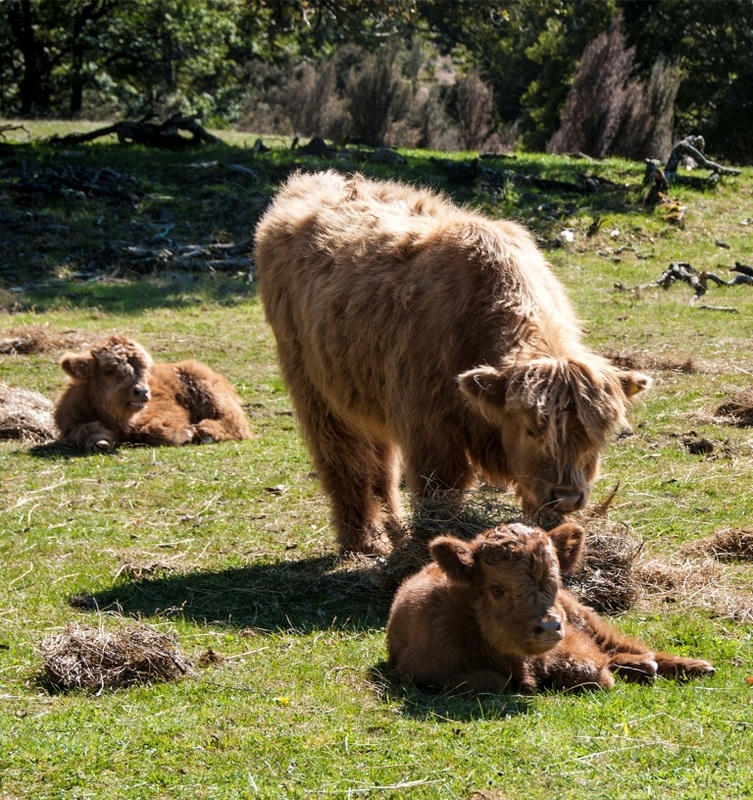 Three of the five calves born at Muntanui in 2015 (L-R: Morag, Wee Jock (standing), Lorna). DECEMBER
Another one done So bring on the hangovers And Happy New Year!
4 Comments
Many thanks to everyone who expressed interest in (and/or bought!) our saffron corms. We hope they grow well for you!
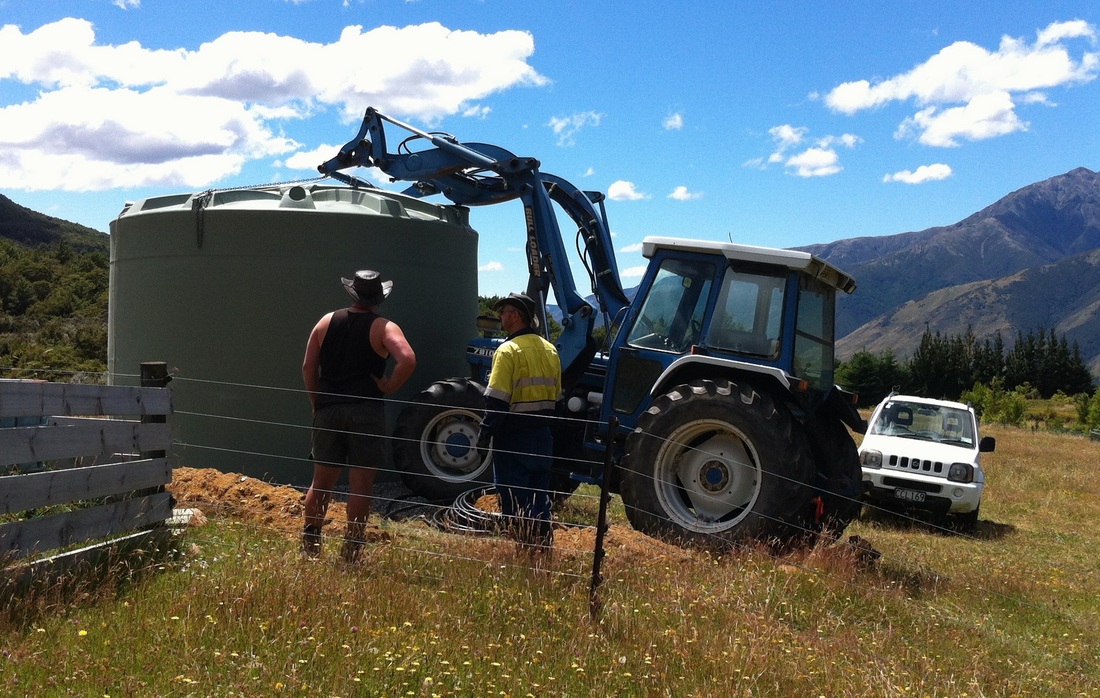
With the harvest due to start any day now, we won't be selling any more corms until late Dec 2015 / early Jan 2016. If you'd like us to notify you when they become available, please let us know via the contact form and we'll be in touch. Now let's hope for a great harvest. . . Posted by Farmer Nik Happy New Year, she said, knowing the sentiment loses a little of its gloss when expressed on the second day of February. Ah well. We do our best. I think we've worked harder on the farm over the last couple of months than we ever have before. Major milestones have been reached -- the new water tank's finally been installed, our cows have come home from across the road because we now have enough feed for them, and the pasture Farmer Wan sowed in November is coming along nicely.
 Red alert! Giant saffron corms are invading the Enterprise! Red alert! Giant saffron corms are invading the Enterprise! So now it's time to deal with the saffron. Saffron corms should be lifted and re-planted every three years.to prevent the beds from becoming overcrowded. We're doing this right now. It should have happened back in December, but we were too busy being overworked farmers to tackle it earlier. As always, we had a plan. It was a good plan. We called it the Saffron Plan and it went like this: figuring that our original 1,000 corms in their eight beds would have increased by two or three times over the last three years, we'd be able to plant out another eight new beds and sell any surplus. Then we come to the bit where the Saffron Plan fell down: we dug over 2,000 corms out of a single bed. In just 36 months, 144 corms turned into more than 2,000. (Someone who's good at maths will know what sort of percentage increase that is and if that smarty-pants person is you, please do enlighten the rest of us.) I wanted Muntanui to brim with fecundity. The fecundity gods obviously listened and responded by blessing our corms with tribble-like properties. So, the bottom line is that we have a serious surplus of corms and we're selling them to anyone in NZ who wants to buy 'em. If you or anyone you know is interested, check out our TradeMe listings or drop us a line using the Contact form. If you need convincing, here's a little bit of sales pitch stuff I've taken from the TradeMe spiel. It's all true and everything. If you don't like sales pitch stuff, I'll just summarise it by saying that our saffron corms are awesome and tough and you should definitely buy them: Our corms have produced AAA-rated saffron for three years running. Grown at 700m in the northern Southern Alps, they’ve survived snow, drought and anything else our demanding climate can throw at them. So get cracking, please! Buy our corms! Now!
Posted by Farmer Nik  Beautiful Seresin Estate, where Farmer Wan pruned vines all winter Beautiful Seresin Estate, where Farmer Wan pruned vines all winter It's drizzling outside. That simple fact makes me want to leap about and drink lots of wine and dance and sing because it's the first rain we've had since 14 August. With more on the way, I'll remove impending drought from my list of Things To Lose Lots Of Sleep Over and focus on telling you about our winter. 1. Earning a crust Not content with merely being an enthusiastic consumer, Farmer Wan is now officially a contributing member of the NZ wine industry. He's personally responsible for pruning 9,870 of Marlborough's 24 million grape vines, a feat that took all winter. I, in keeping with my role as a damned fine writer, spent the frigid months in my stuffy, overheated office and surfed the Net under the pretense of working. With our finances back in a semi-liquid state, we immediately bought a sprayer, a wood chipper and food. 2. 2014 saffron harvest It wasn't a good season. Last year, we ended up with just under 41 grams. This year, we didn't even reach 20 grams. But we had reassuring feedback from Mark, the guy we grow for: Although your volume wasn’t as much as you want/expected, the quality is exceptional. Beautiful colour and aroma and it has a really nice feel to it indicating that the moisture content is spot on. . . 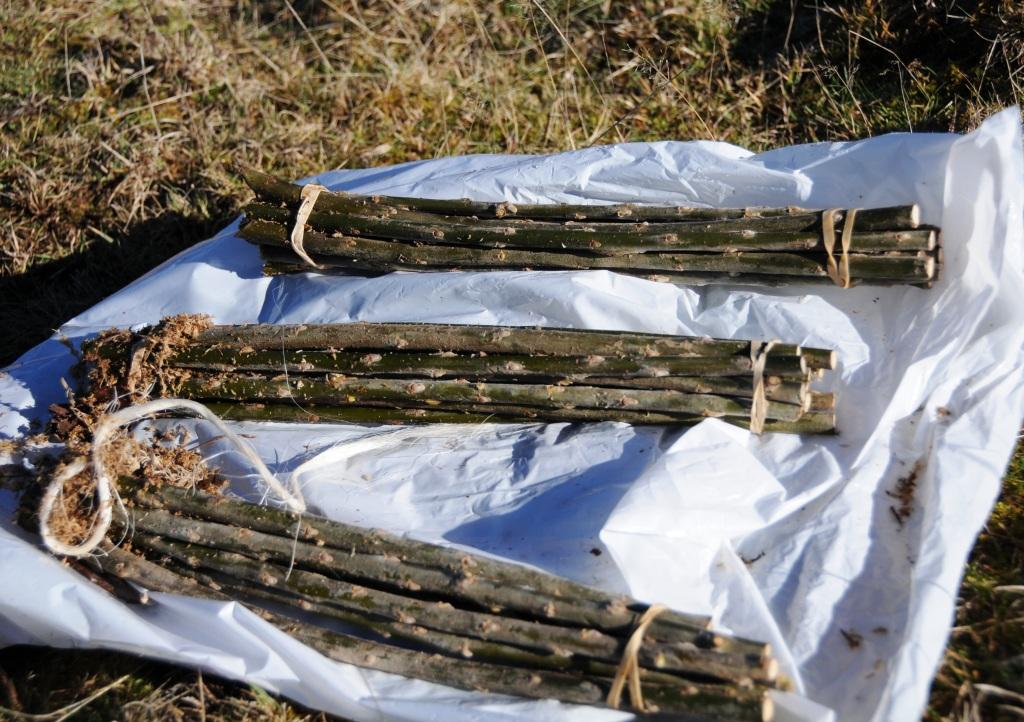 Willow poles for planting Willow poles for planting So we must be doing something right. 3. Fodder willows As part of the permaculture strategy of "many elements for one result" we're aiming to future-proof Muntanui against drought by planting alternative sources of livestock fodder. I've done a fair bit of research into fodder trees and shrubs, both native and exotic. I decided to start our planting this year with something relatively easy: Japanese fodder willows (Salix schwerinii 'Kinuyanagi'). This is a vigorous shrub willow, reaching 3-4m and producing up to 10 tonnes of edible dry matter per hectare per year -- perfect over summer. In July, we planted 60 willow poles in a trial plot on our worst bit of land (it's unproductive anyway, so good for experimental stuff). Farmer Wan's sister was staying with us at the time and helped with the planting, so we named the area Fiona's Block in her honour. If the poles strike well -- and they're doing okay at the moment -- we'll plant 300 more next winter. 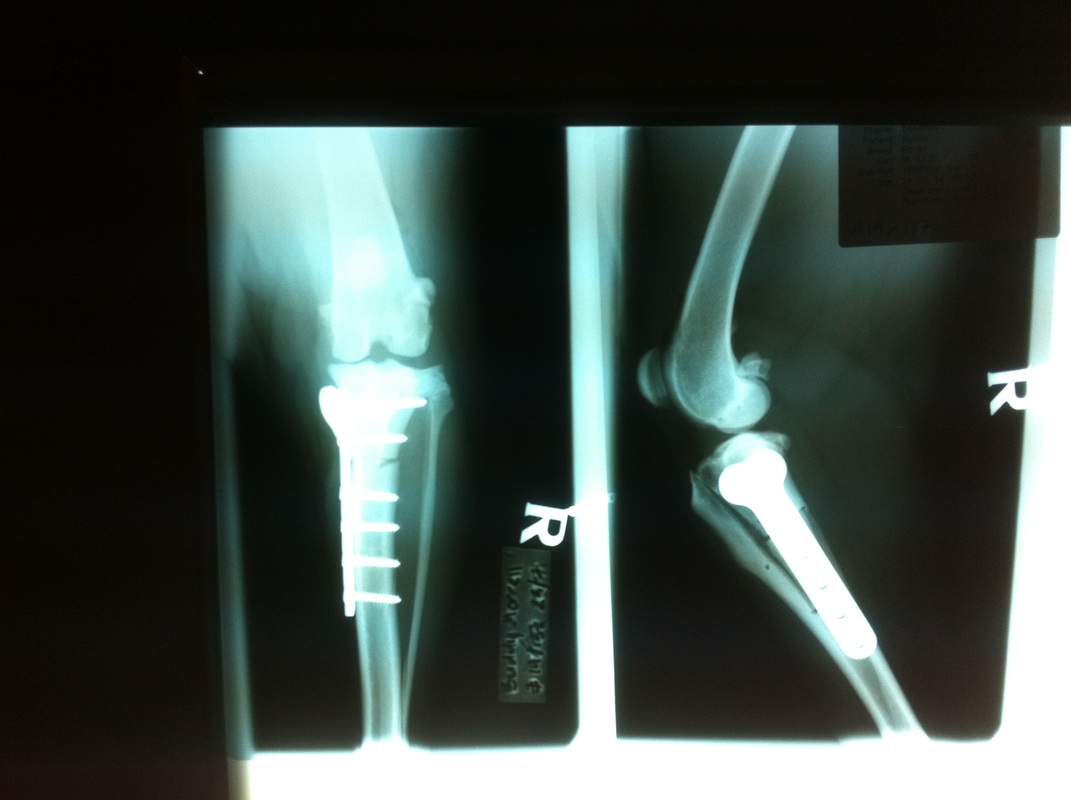 4. The Bionic Hound It hasn't escaped our notice that Buddy The Dog seems to have a strange effect on people. Confirmed dog haters, frightened little kids, nervous older parental types -- they all end up enchanted with him. I've just discovered that he has snuck into the boot room and scoffed all the cat's food, so I am most emphatically not enchanted with him right now. However, there's no denying that the Buddy Effect is a real and powerful phenomenon. With that in mind, I thought his fans might like to see how he brought us three thousands steps closer to bankruptcy this winter. This medical procedure has a long name which I've blocked from my mind and an even longer price tag which I can't for the life of me forget. It's what happens when your stupid dog ruptures a cruciate ligament. For the first 6-8 weeks post-surgery, he was confined to quarters and only allowed out on a lead for five minutes a day to do his business. We really loved that bit when it was snowing. He goes for his next x-ray in a week. I'll keep his devotees posted. 5. Third anniversary at Muntanui
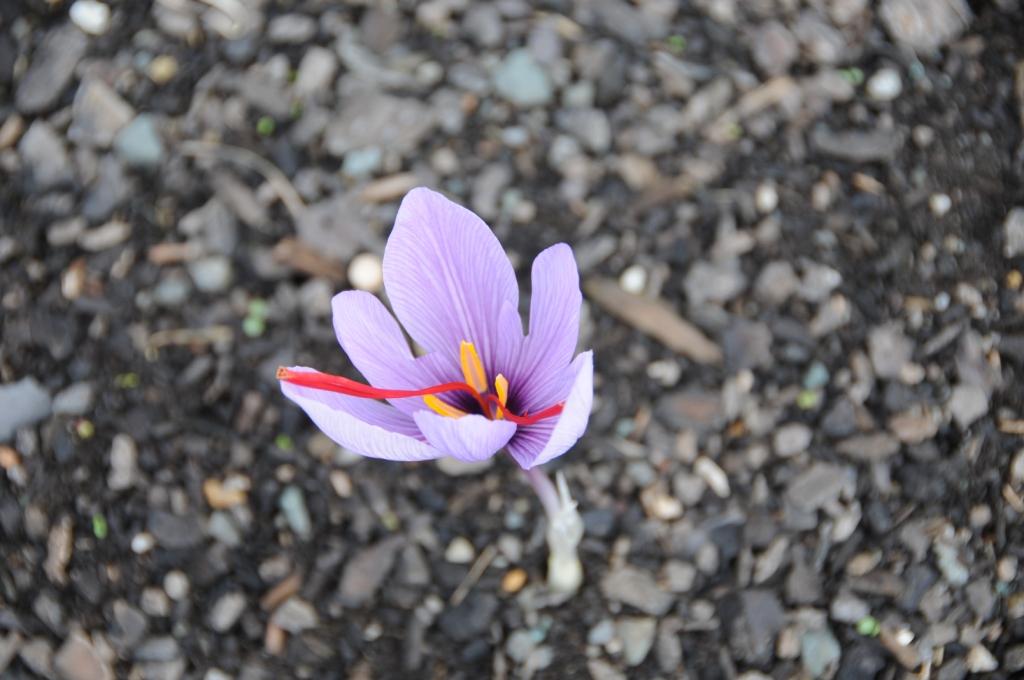
Our third anniversary slipped by on 28 August. After a frosty start, it was a sunny day. One of our heritage faverolles chooks resumed laying and produced her first egg of the season. The plovers returned from wherever they go over winter (Western Australia, I think) and started attacking any other birds that came near them. It was a good day. We were happy. And there'll be plenty more of that to come. Posted by Farmer Nik Just when we thought we'd almost recovered and caught up with everything after the totally mental month that was March, Farmer Wan discovered these: 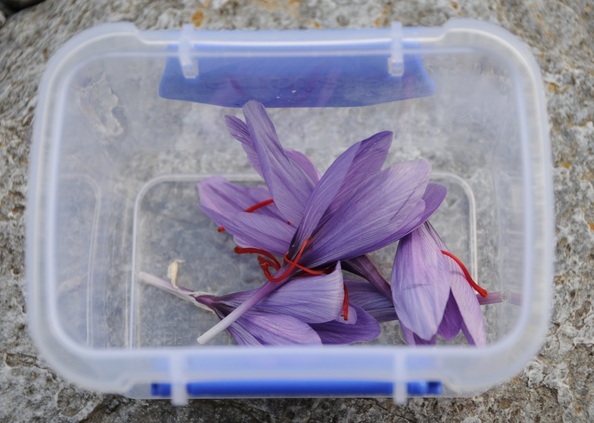 31 March 2014: our first saffron for the year Note that there are five of them. Five. Plural. In 2012 and 2013, the season began with singles -- lone, brave little blooms that shoved their heads up first to take a look and report back to the others. We had plenty of time to get excited and to speculate about the size of the harvest. This year, with five flowers on Day One. . . well, who knows. It'll either be huge or it's the entire haul. That would be un-fun.
I took a bit more care with the plants this time, watering them with worm tea when they were actively growing last winter. Once they had all died away in early summer, we didn't do much to the beds except weed them two or three times and top them up with compost. It's been a mark of how busy we've been that the topping up bizzo didn't actually get finished until the end of last week. Ah well. Saffron plants are tough little suckers. We breed 'em resilient up here in the mountains. I'll try to update more frequently from now on. She said optimistically. Posted by Farmer Nik Yesterday, we received the verdict on this year's saffron harvest: Just a quick note to let you know that your 2013 saffron consignment arrived safely . . . Wow! It has to be the most vibrant looking saffron I've received this season. It really is stunning! We're still doing the happy dance. The 5,887 flowers we picked this year yielded a total volume of 40.95 grams of saffron, an increase of just under four times last year's harvest (10.4 grams). Mark, the guy we grow for and author of yesterday's email, had been hoping for more but said that it was probably a good result, given the regional weather conditions over the last six months. We'd been worried that we'd over-dried half of it. He said if anything, it was very slightly under-dried but near enough to spot-on. He finished with: Thank you for the excellent product you produced this year. It's a huge relief for us. Not only are we going to be paid but Mark's talking about popping down for a visit. It'll be nice to meet him, as we've only communicated by phone and email so far.
Needless to say, I'm very motivated to take extra-special care of our plants for the next season. With flowering over, the beds are full of foliage. This will die off in early summer, feeding the production of new corms, so now is the time to give the plants some extra tucker. I'll start with a bit of delicious worm wee and move on to comfrey tea in mid-spring. That'll make the little darlings' eyes water. Still on the subject of harvests, despite the drought conditions over summer and early autumn, our soil had improved enough in the vege garden to give us a small surplus of some veges to freeze: 1.5 kilos of bush beans, a couple of kilos of broccoli and rhubarb and 2.5 kilos of tomato pulp. The star, though, was this year's raspberry harvest: 13.8 kilos! If I could give any advice to a new grower, it would be this: count and weigh everything and keep records. It's the most tangible way of measuring your progress. And it'll remind you why you felt compelled to pay a small fortune for a bloody great chest freezer, just like we recently did. Posted by Farmer Nik Thanks to everyone who helped with harvesting and processing saffron (and raspberries!) this year. You made our lives a little easier and we love you for it. x 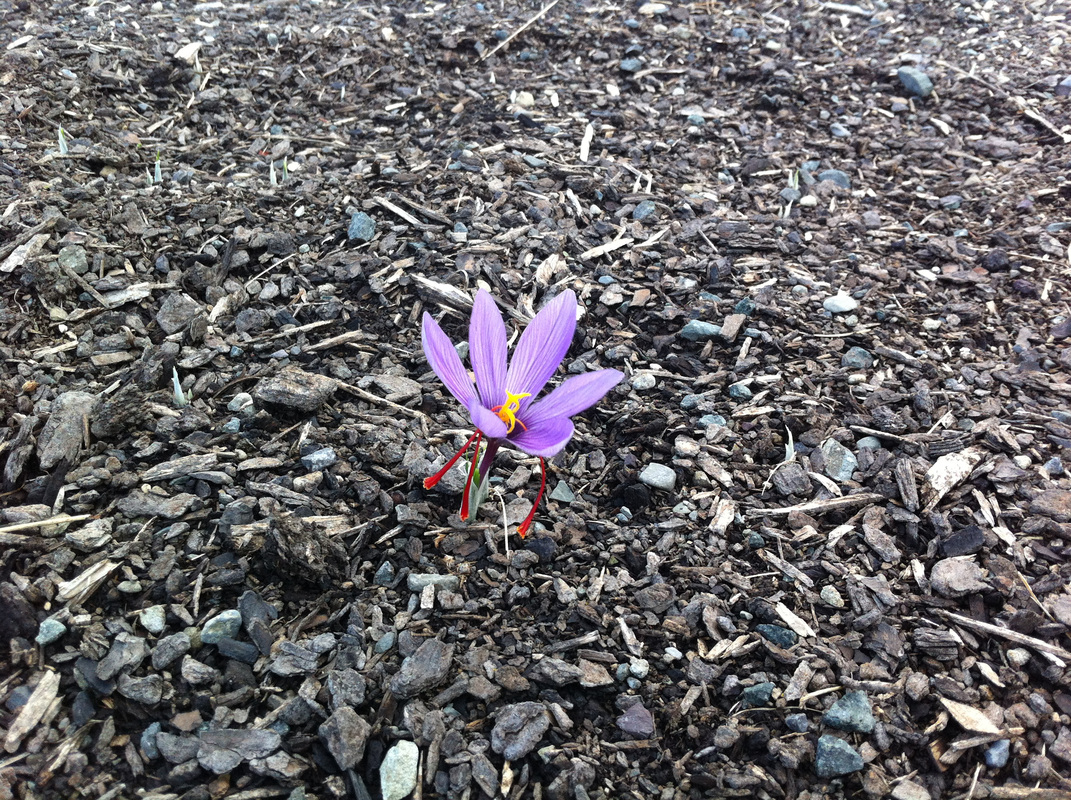 Oh, you pretty thing ... I'd been getting a little nervous about how this year's saffron harvest would go. Apart from topping up the raised beds in mid-December (thanks to Margaret of Clan Davidson for spending an entire afternoon pushing barrows full of compost uphill) and doing the occasional bit of weeding, we didn't pay them much attention. Then we had six weeks of hot weather and no rain. Farmer Wan hooked up a sprinkler, gave the parched corms a drink and we waited. Much to our surprise, our first flower popped up on 30 March, two days earlier than last year. 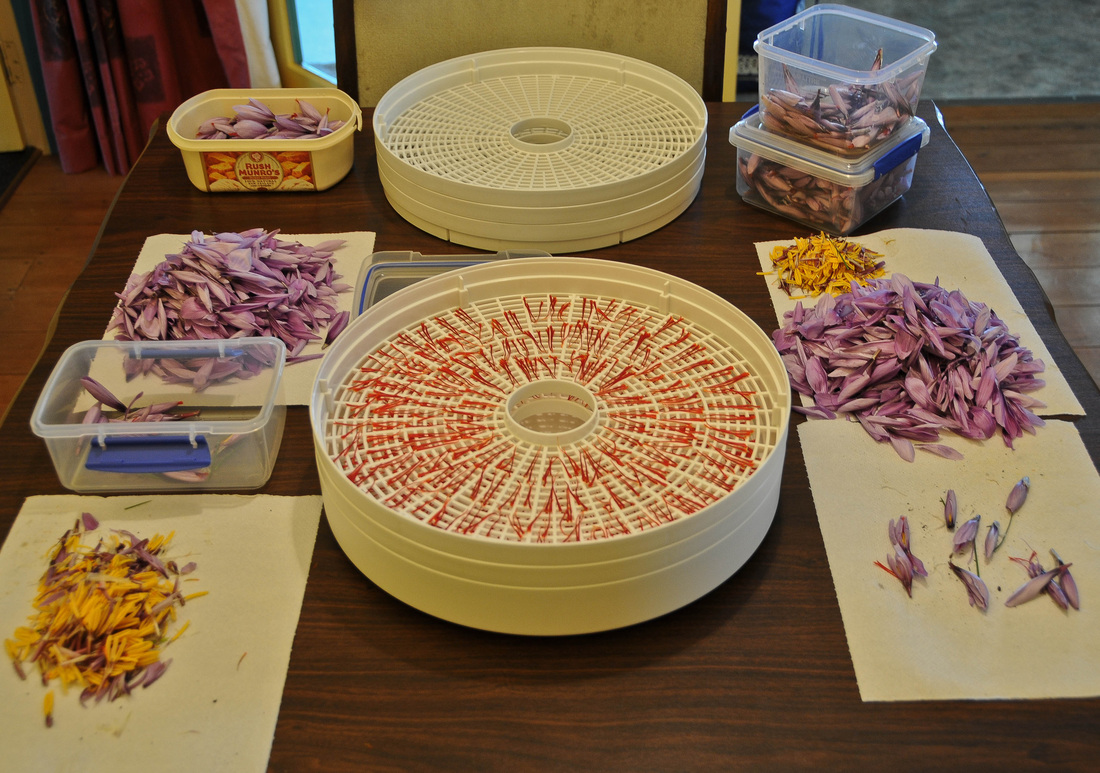 Wednesday: only another 300 or so to process Everything's different to last year, this time around. Although we're not harvesting 500 flowers a day, as the guy we're growing for said we might, there are definitely more of them. Yesterday, I picked 344. On Wednesday, we processed 745. And yeah, I count them. Last year, we had a lot more foliage appear before the flowers. This year, it's the other way around, which I suspect is how it's meant to be. The red stigmas (the actual saffron bits) seem longer this year. There's a higher proportion of doubles, rather than the more desirable triplets. I'm not sure why. I think the 2013 harvest may well be more drawn out. The corms were all planted on the same day last year and most of the plants came up at the same time. This year, we still have entire rows yet to break the surface. We've got the processing side of things down pat now. It's fiddly work but satisfying, in its way. The most challenging part of the whole process is the drying. Last year, we under-dried. This year, we might have gone a little too far the other way. It's a nerve-wracking prospect because perfect product means top dollar. We won't know for sure until it's sent away and analysed. In the meantime, we'll do our best to get it spot-on. And now, to prove there's a lot more to Farmer Wan than simply building chook houses, chopping firewood and constructing bunny-proof fences, feast your eyes on his gorgeous images of our exotic cash crop. Posted by Farmer Nik We recently received a report on the quality of our saffron harvest. The final weight was 10.4 grams. I was told that anything between 8 and 12 grams is terrific for a first-time harvest, so we were right in there. Smugness ensued. Here's a bit more from the report: "For a first up harvest you did extremely well, with both the look and feel of the saffron being extremely close to perfect ... Brilliant first up presentation." What marked the difference between "extremely close" to perfection and the real deal was the need for seven minutes' extra drying time. We were sent back a sample of our own saffron together with a sample of some stuff that was faultless, so we've got a comparison for next year's harvest -- if the samples manage to languish that long in our pantry (doubtful).
Accompanying the report was a cheque. As in, payment. As in, income. As in, something to put in our bank account. So yay saffron! Viva you! You're the star ingredient in my new favourite dessert AND you bring us money. Brilliant. Posted by Farmer Nik And I'm not talking about Game of Thrones here. We were blessed with 16 straight days of glorious weather during April; we had temperatures up to 26 degrees C and no rain. Of course it all had to come to an end. We now lose the sun over the hill at the back at around 4:00pm and the temperature plummets accordingly. This morning we awoke to an outside temperature of 5 degrees C with a wind chill which made it feel like -8 degrees C, there is a dusting of snow on the ranges and we've had the fire lit all day. Time to get all those winter jobs done (plus all of the summer ones that weren't completed!) So what have we been doing in the month since we last posted? Bounteous harvest (Plums, plums and more plums) Last year the apple trees were loaded with fruit and the plum trees were virtually empty; this year we harvested maybe a dozen apples and several kilograms of plums, which Farmer Nik proceeded to turn into the most beautiful Plum & Lavender or Plum & Vanilla jams. Just as well really, because all of the French Apricot Jam made in Jan/Feb was finished off during Mum and Dad's visit in February. (Note to Farmers Nik & Wan: make more next year!). "Wee" Bonnie arrives Early in the month we had a new arrival: Bonnie the Highland cow was delivered from nearby Tadmor Valley and settled in well with the rest of the herd. She is almost twice the size of our bull so we may have to build him a box to stand on when the time comes for him to do what bulls do best (only kidding!). She loves molasses spread on hay and will now take it from our hands. Easter Bunny pays a visit Having family visit at Easter prompted an unexpected visit by the Easter Bunny. On Easter Sunday morning there were numerous bunny footprints around Muntanui. These were eagerly followed by the youngest of the party and led to various locations of hidden chocolate eggs (including amongst the real eggs), each discovered amidst squeals of delight. During this Easter family visit we headed once more to the Hidden Cafe for lunch and a quiet afternoon in the sculpture garden, well worth a visit if you are in the area. Saffron harvest early We had expected the saffron corms to flower in early May, so when they started popping up on the 1st April (see below) we were surprised. The harvest peaked just prior to the middle of the month, unfortunately coinciding with our four-day tramp to the Blue Lake. Fortunately, thanks to the generosity of friends from Wakefield, we were able to complete the tramp and they took care of Muntanui, all the animals and the saffron harvesting/processing whilst we were away. We have processed all of the harvest so far; and having peaked at 120 flowers in one day, we are now picking no more than a dozen each morning. (Note to Farmers Nik & Wan: don't go away in April!). The Blue Lake Tramp The Reason: Farmer Nik pitched the idea for a story about the Blue Lake to NZ Geographic magazine, the original idea being to hitch a ride on a DoC chopper and then write the story. The DoC representative who Farmer Nik spoke with thought this a good idea but suggested the story might be better if Farmer Nik actually walked all the way to Blue Lake. She agreed. The Preparation: Buying lots of gear (boots, jackets, gas cooker, freeze-dried meals). Climbing to the top of Beeby's Knob (1441m) one Saturday to make sure we were actually fit enough to attempt a four-day walk. The Tramp: Thanks to the generosity of neighbours Chris and Jean, we were able to avoid the high cost of a water taxi to the head of Lake Rotoroa. Chris took us all of the way up the lake in his tinny and dropped us near the Sabine Hut at around 10:00am. This was the first time that either of us had had sizeable packs on our backs for many years and it took a bit of getting used to. The sign said “West Sabine Hut 5 hours”. No worries, we thought, these guide times are always on the generous side. Eight hours later, just as it was beginning to get dark, we arrived at the river crossing close to the hut. The swing bridge had been washed away the previous year, but a convenient log enabled a shaky crossing to the other side of the river. We were alone in the hut that evening and soon realised that the first item to be added to our “List of Things to Take Next Time” was candles. The next day dawned beautiful once more and after our (interesting) re-constituted freeze-dried cooked breakfast we set off to Blue Lake; according to the signs, a four-hour walk. Crossing several avalanche paths, we made our way further up the valley and then started the final climb up to the lake. This time we managed the four hour walk in five hours, but it was well worth it. The Blue Lake is the clearest recorded freshwater in the world and a very special place, surrounded as it is by an amphitheatre of mountains. To read more about it, look out for Farmer Nik's article, we'll post when it is published and where to find it. That evening we shared the Blue Lake Hut with three Kiwis, an Englishman and a lone Israeli tramper. In the morning we stayed long enough to see the sun once more on the lake before heading back down to West Sabine Hut. Going downhill has never been my favourite part of walking and doesn't do much for the knees. However, having neglected until now to use the walking poles we had been lent, we both decided this would be a good time to try them – good idea, wish we'd thought of it sooner. We both had this crazy idea that walking poles were related to walking sticks, i.e., for the infirm or old. No. Using one pole each was more like having a third leg, especially when it came to descending steep slopes or crossing streams, very useful and took some of the strain from the already weary legs. (Note to Farmers Wan & Nik: Buy walking poles before next tramp). The descent to West Sabine Hut signposted at 3 ½ hours took us only 4 ½. We were definitely getting better at this. We enjoyed more company in the Hut that evening with Diana the volunteer warden and Sandra and Markus from Switzerland all passing the night there before they headed up to Blue Lake and beyond. We were up early and crossing the river again by 07:30am. This time we had a deadline; we had arranged for Chris to pick us up at the head of Lake Rotoroa, (perhaps optimistically) at 2:00pm. We did the five-hour walk in six hours and arrived at the head of the lake just as Chris and Jean motored into view, bringing with them a very welcome flask of hot tea. We hadn't walked particularly far in four days (approx 40km) but it was one of the hardest walks we had both ever done, well worth the sore feet and knees. The Swiss are coming When we met Sandra and Markus during our last night on the tramp we had said to them, "Come and have hot showers and a meal and stay over", knowing they had four days more walking to do after we left them. We expected them to stay the night and head away the next day... how wrong we were! They arrived at our place mid-afternoon a few days after we got home and immediately offered to help with any work around the farm, so they were tasked with digging up the main crop spuds, a job they completed at a rate of knots. Next morning, they requested more work and we set about relocating the cattle yards in the front paddock, a job that took longer than expected. Their third day here was spent cutting firewood, building compost heaps and weeding in the vegetable garden, these guys are machines! We very much enjoyed their company and cannot thank them enough for all the work they did whilst here. As I have said to Farmer Nik on several occasions, I have never met a Swiss person I did not like and these two were certainly no exception. So, a busy and most productive month and certainly the best and most settled weather we have experienced since arriving here. We have completed our first harvest of a saleable crop and look forward to finding out how much it is actually worth. Finally, we were interviewed for the local free newspaper. Please excuse the several mistakes in the article, don't believe everything you read...see here on Page 22. (The Leader Richmond-Waimea, 26 April 2012) Here is a selection of photos of April fun: Posted by Farmer Wan
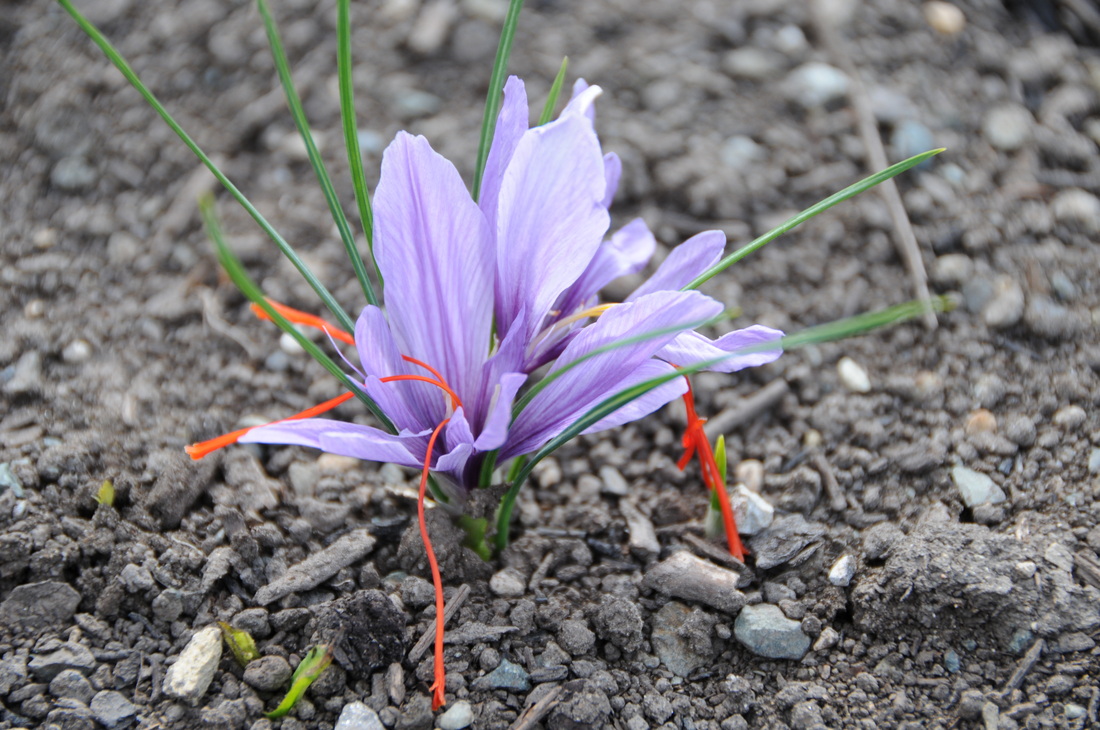 Let the saffron harvest commence! There was nothing April-foolish about Farmer Wan's discovery yesterday of our first saffron crocus flowers (and not a pea-shoot in sight).
Having now officially harvested these little beauties, all we have to do is remove the orange stigmas (keeping them joined to each other at the bottom), dry them to the right standard and ship 'em off. We reckon these terrific specimens of the world's most expensive spice are probably worth 0.03cents. Viva saffron! Posted by Farmer Nik |
About Ewan and Niki
Farmer WanScottish mechanical engineer with a deep and abiding passion for good food. Outstanding cook. Builder of lots of stuff. Cattle whisperer. Connoisseur of beer. A lover rather than a fighter. 
Farmer NikKiwi writer and broadcaster who hates cabbage, even though she knows it's good for her. Chook wrangler. Grower of food and flowers. Maker of fine preserves. Lover of dancing and wine. Definitely a fighter. Archives
November 2016
Categories
All
|

 RSS Feed
